Research
Could ChatGPT’s emailed prompts help you decide what to publish?

I noticed something in OpenAI’s emails: prompts that do more than ask a quick question. They describe a task, give it some structure and invite you to carry on in ChatGPT.
That made me think about the companies on the other side of the conversation. If a promoted task overlaps with something your business genuinely knows, could it help you decide what useful content to publish?
I think it is worth testing. But there are a few steps between an email landing in someone’s inbox and ChatGPT recommending your company.
A public example we can check
OpenAI Education’s first issue of The Edu Prompt, dated 2 June 2026, includes a teacher’s summer-planning task and a task for comparing educational visual ideas. Each has an “Open this prompt in ChatGPT” button.
The public buttons carry the prompt text in the ChatGPT link. That is useful evidence of the mechanism: a newsletter can give someone a structured starting point and a route into the product.
It does not tell us how many readers used the prompt, what they asked next or whether a website benefited. It also does not mean the prompt was a search query.
The format varies. The 22 October issue gives an interactive statistics prompt and asks readers to paste it into ChatGPT. So the durable observation is the promoted task, not one particular button or link format.
There is a learning curve in using AI
A detailed example can show someone what to ask, what context to supply and how to work through a task. That is my reading of why these prompts are interesting: they can make unfamiliar uses easier to try.
There is broader evidence that use develops over time. OpenAI’s June 2026 adoption analysis reports that the users it studied expanded the range of tasks they tried. It is an observational analysis of a defined sample, not evidence that newsletter prompts caused the change.
My first thought was that these emails could also bring people back and stimulate interest in new tasks. That remains a hypothesis about the campaign. OpenAI’s published account of what it optimizes ChatGPT for emphasizes helping people accomplish things rather than maximizing time or clicks; it also says it pays attention to return use. “OpenAI needs traffic” would be too simple a conclusion to draw from an email.
A prompt is only the beginning
For a company hoping to be recommended, these are separate events:
- A person uses the prompt. They may change it or answer follow-up questions.
- ChatGPT searches the web, if needed. A planning or writing task may be completed without looking up any company.
- Relevant information is retrieved. Your page is one possible source among many.
- The answer mentions, cites or recommends a company. Those are different outcomes: a source citation is not necessarily an endorsement.
- The person visits or makes an inquiry. They may also get what they need without clicking.
OpenAI’s current search guidance says ChatGPT may search automatically when current information would help; people can also choose Search. When it uses search partners, it may turn a request into several targeted queries. Location and relevant memory can affect those queries. So matching an emailed prompt word for word is not a dependable content strategy.
And if the prompt already names products to compare, their appearance in the answer does not show that ChatGPT independently discovered or recommended them.
Look for the question your company can answer well
I would treat the newsletter as a qualitative research signal: evidence of a task OpenAI is encouraging people to try. It is not a keyword-volume report.
Here is a hypothetical example. Suppose a promoted task helps someone plan a house move. A removal company could publish a practical access checklist: what to measure, which building restrictions to confirm, how fragile items are handled and what changes a quote. Real examples from its team would make that more useful than another generic moving article.
If the conversation later turns to finding a suitable local company, clear service areas, inclusions and evidence of experience could help someone assess the business. The original prompt may never reach that stage. This example is an editorial opportunity, not a result we have measured.
Before commissioning anything, ask: does this task fit our customers, do we have something original to contribute, and would the page still be worth reading if an AI assistant never cited it?
In health, relevance alone is not enough. Content needs suitable clinical expertise, credible sources and review proportionate to its claims. A prompt is not a reason to rush out medical advice or attach a product pitch to someone’s concern.
Publish useful work, then test the idea
Start with one topic and improve an existing page if it already serves the need. Add specific evidence, an accountable author or reviewer, and a review date. Respond while the task is relevant, but do not confuse speed with a proven ranking advantage.
Have your web team check access as well. OpenAI documents separate controls for its search crawler and training crawler: allowing OAI-SearchBot and allowing GPTBot are independent decisions. Review the intended search access and hosting rules. Crawl access does not establish that a page will be chosen.
A small test can keep the idea honest:
- Record a baseline. Save the public newsletter URL, date and task. Test a small, fixed set of genuinely relevant questions before changing the page. Record the date, product, search setting and relevant location or personalization conditions.
- Keep results separate. Note whether search occurred, whether the company was mentioned, which page was cited and whether the answer actually recommended it. Save the answer and check its links.
- Repeat under comparable conditions. Use independent fresh conversations with the same relevant location and search settings; note that fresh chats alone do not remove memory or personalization. Revisit the same questions after publication and allow for discovery time. Include related questions for an unchanged topic as a rough comparison. Do not select only the answers that look good.
- Check business outcomes. Review identifiable ChatGPT referrals, landing-page engagement and qualified inquiries separately. A referral does not identify the original email or prompt, and missing attribution can leave visits unclassified.
This is a practical learning exercise, not a controlled proof of causation. Model changes, competing pages, seasonality and personalization can all affect what you observe. One favorable answer is an observation.
The useful habit is to notice what people are being invited to do with AI, then decide whether your company can help with that task. For GEO—generative engine optimization—that is a sensible place to look for content ideas. The recommendation and the traffic still have to be earned, observed and measured.
Reviewed 25 October 2026. Public newsletter evidence establishes promoted prompts and prompt-bearing links. The content workflow and moving example are proposed practice, not campaign performance findings.
Keep reading
 Playbook
The Click After the Citation: Is Your Page Ready for an AI-Referred Visitor?
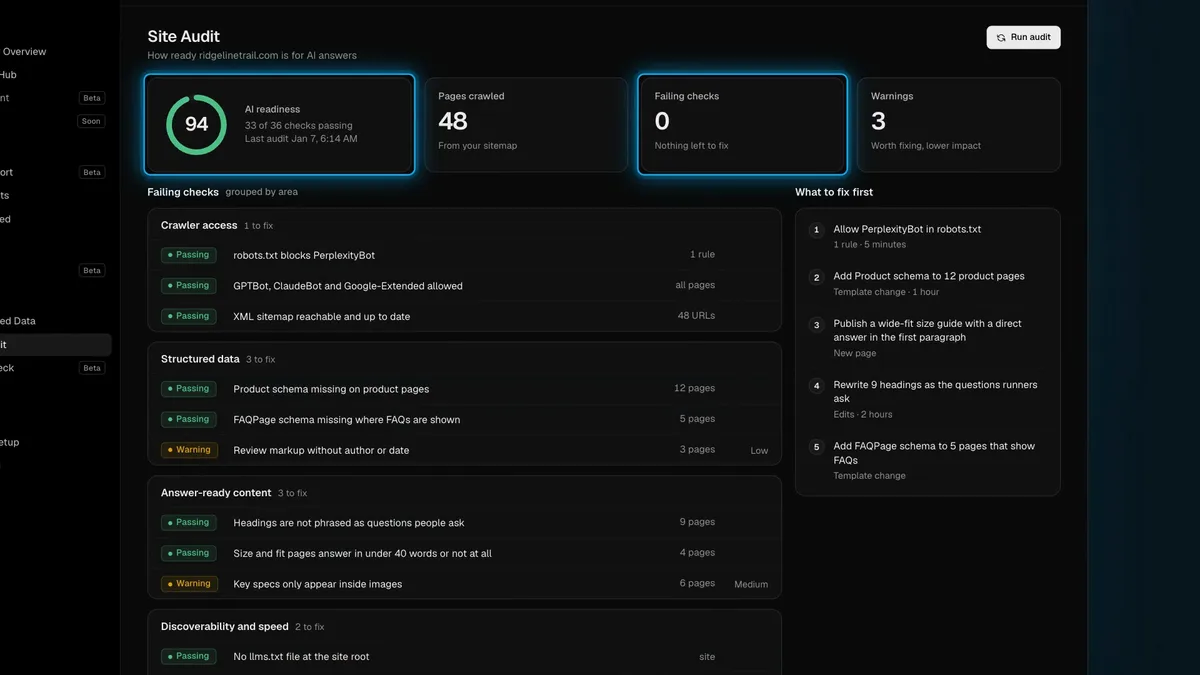
A citation can lead someone to your page. Does the page help them finish the task? Use these four checks to review the answer, supporting detail and next step.
5 min read
 Playbook
AI Knows Your Brand. Does It Have the Facts Right?
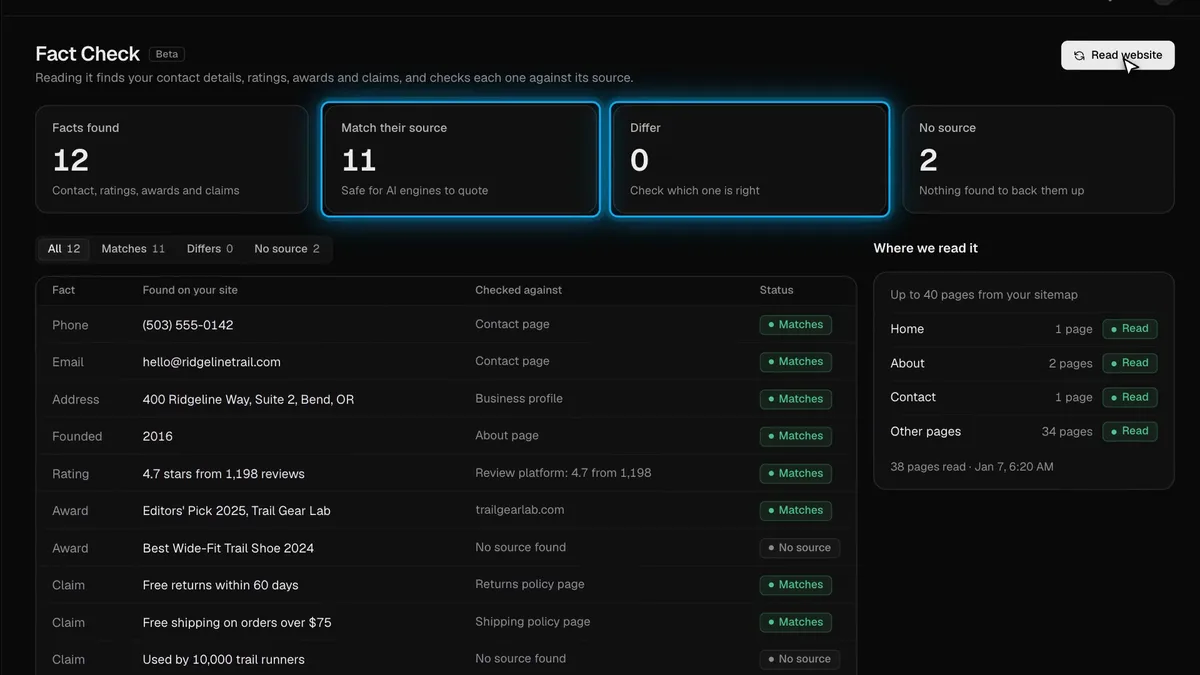
Showing up in AI answers is one question. Being described correctly is another. Here's a repeatable way to log what AI says about your brand, label each claim against verified facts, and correct the sources you can reach.
6 min read
 Playbook
What should your next GEO investment fix?
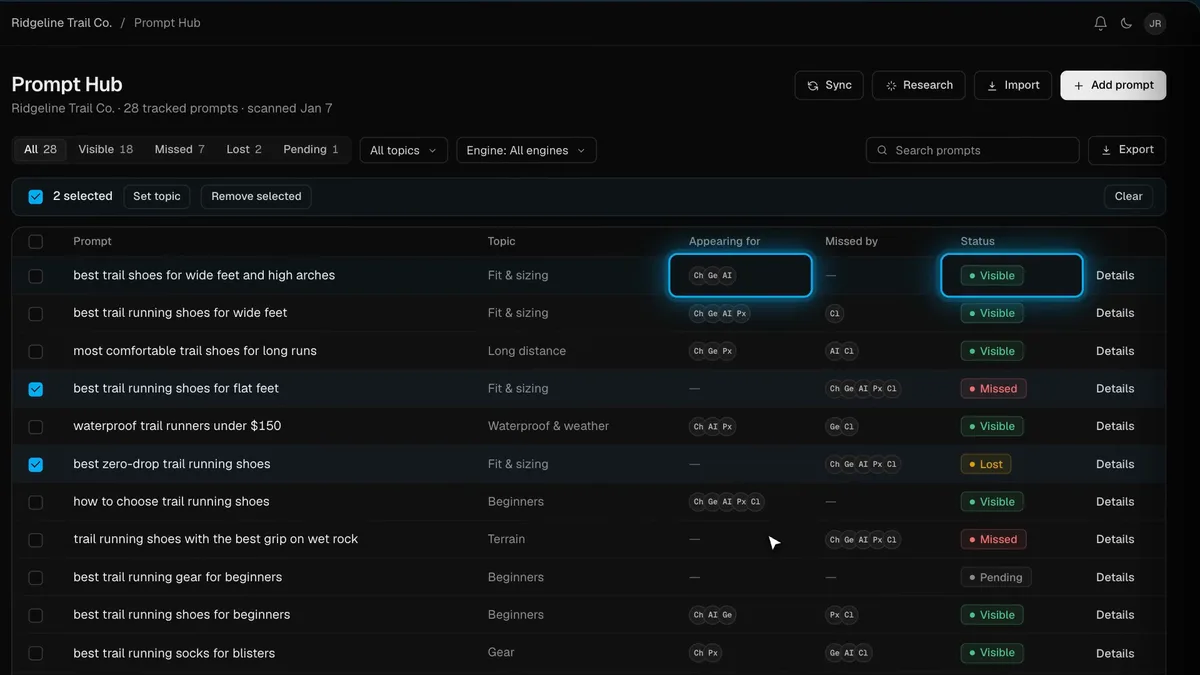
A popular tactic may be the wrong next task for your website. Use four practical gates to decide what to fix, what to fund and how to measure the result.
6 min read