GEO guides · Playbooks
What is llms.txt, and do you need one?
llms.txt is a proposed Markdown file at the root of a site that gives AI agents a short summary and links to the most useful pages. Jeremy Howard proposed it in September 2024. Google says Search does not use it and that it neither helps nor harms Search visibility. Publishing one is optional.
Last updated November 16, 2026 · By Auden editorial team · 5 min read

Key takeaways
What is llms.txt?
The llms.txt site describes it as a proposal to standardize on an /llms.txt file that provides information to help agents use a website. It is a Markdown file that gives brief background, guidance and links to detailed content. Jeremy Howard proposed it, and the proposal page is dated September 3, 2024.
The proposal says the file can sit at the site root or at any path within it, covering the pages under that path, and that agents should use the most specific file where more than one applies.1 It is written for agents that read a site, so it is guidance and not a way to control who can crawl. Robots.txt handles access.4
What goes in the file?
The proposal sets an order. An H1 with the project or site name is the only required section. Next come an optional blockquote with a short summary, then optional non-heading detail, then any number of H2 sections that hold lists of links. A section titled Optional marks secondary links an agent can skip.
Each list item is a Markdown link, optionally followed by a colon and notes.1 A small example for a fictional business:
# Example Outfitters

> Example Outfitters sells camping gear to customers in the United States and publishes buying guides.

## Guides
- [Choosing a tent](https://example.com/guides/tents/): How to size and compare tents
- [Sleeping bag ratings](https://example.com/guides/sleeping-bags/): What temperature ratings mean

## Policies
- [Returns](https://example.com/returns/): Return window and conditions

## Optional
- [Press kit](https://example.com/press/): Logos and company facts
Keep the note after each link to a plain description of what the page contains. Anyone reviewing the file later should be able to check each line against its page in a few seconds.
Does any AI engine use it?
Google says no for Search: it does not use llms.txt, and creating the file for other services neither helps nor harms Search visibility. The llms.txt site says thousands of sites publish one and that OpenAI, Anthropic and Google Gemini publish them for their developer documentation. Publishers adopting a file is different evidence from an engine reading it.
The proposal page also notes that documentation platforms generate these files automatically and that Chrome’s Lighthouse audits for them.1 Google’s optimization guide says you do not need llms.txt, AI text files, special markup or Markdown files to appear in Google Search.2 The same Google page says writing them for other services is fine.
We found no engine documentation in this set of sources that commits to reading llms.txt when it builds an answer. Treat any claim that a particular assistant ranks sites by it as unverified until the vendor says so.

How do you publish one?
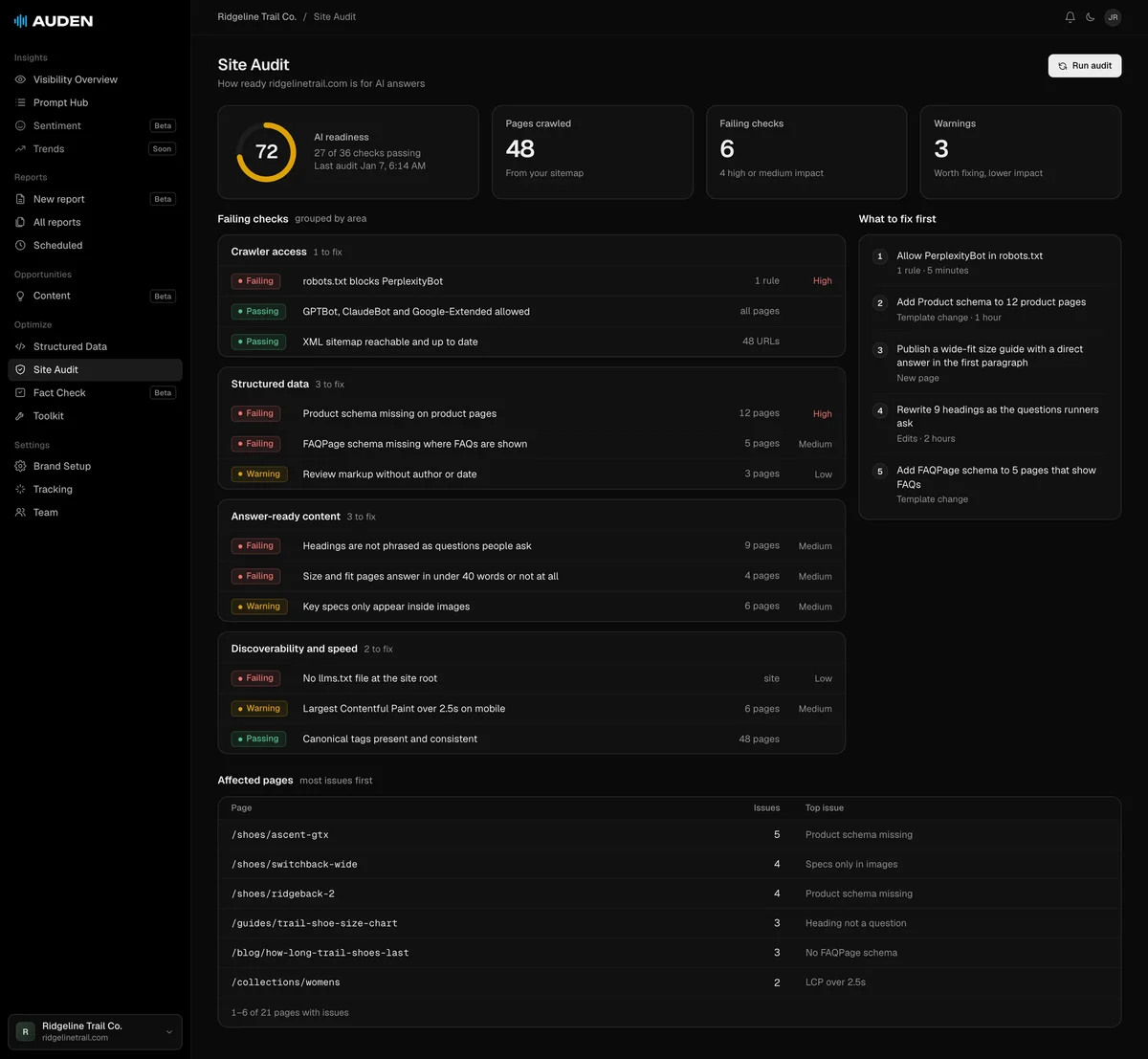
Decide first whether your site would gain from it. Sites with many pages, product documentation or guides are the usual candidates. Then write the file in the proposal’s order, link only to canonical pages that return a 200 response, publish it at /llms.txt, and update it when your key pages change.
- List the pages a newcomer would need: what you do, who you serve, your policies, and your best answers to common questions.
- Write the H1 and a one-paragraph summary in plain language that matches your site.
- Group links under H2 headings. Put secondary pages under an Optional heading.
- Check every URL loads, is the canonical version and is not blocked in robots.txt.
- Upload the file as plain text at https://yourdomain.com/llms.txt.
- Add a calendar reminder to review it when pages are added, merged or retired.
Treat the file as part of your content process. When a guide is merged or a product page is retired, its entry goes with it, so the file never points to a page that returns an error.
What should come before llms.txt?
The basics that Google and the other engines document: crawlers allowed in, pages indexed and eligible for a snippet, and content that answers the question directly. Google lists being indexed and snippet-eligible as the requirement for its AI features. A summary file does not replace any of that.
Work through AI crawlers and robots.txt and structured data for AI search first.3
Questions people ask
Is llms.txt an official standard?
No. The llms.txt site calls it a proposal to standardize on the file.1
Will llms.txt help me rank in Google?
Google says Search does not use it and that it neither helps nor harms Search visibility.2
Can llms.txt block AI crawlers?
Where does the file go?
At the site root, or at any path within it, where it covers the pages under that path. Agents should use the most specific file that applies.1
What is required in the file?
Only the H1 with the project or site name. The summary, detail and link sections are optional.1
Sources
Every statement about how an engine, crawler, file or schema works comes from the pages below, which we read on November 16, 2026. Vendors change these pages, so check the originals before you act.
- 1
- 2Google Search CentralOptimizing your website for generative AI features on Google Searchdevelopers.google.com/search/docs/fundamentals/ai-optimization-guide · accessed November 16, 2026
- 3Google Search CentralAI features and your websitedevelopers.google.com/search/docs/appearance/ai-features · accessed November 16, 2026
- 4Google Search CentralHow to write and submit a robots.txt filedevelopers.google.com/search/docs/crawling-indexing/robots/create-robots-txt · accessed November 16, 2026
Related guides
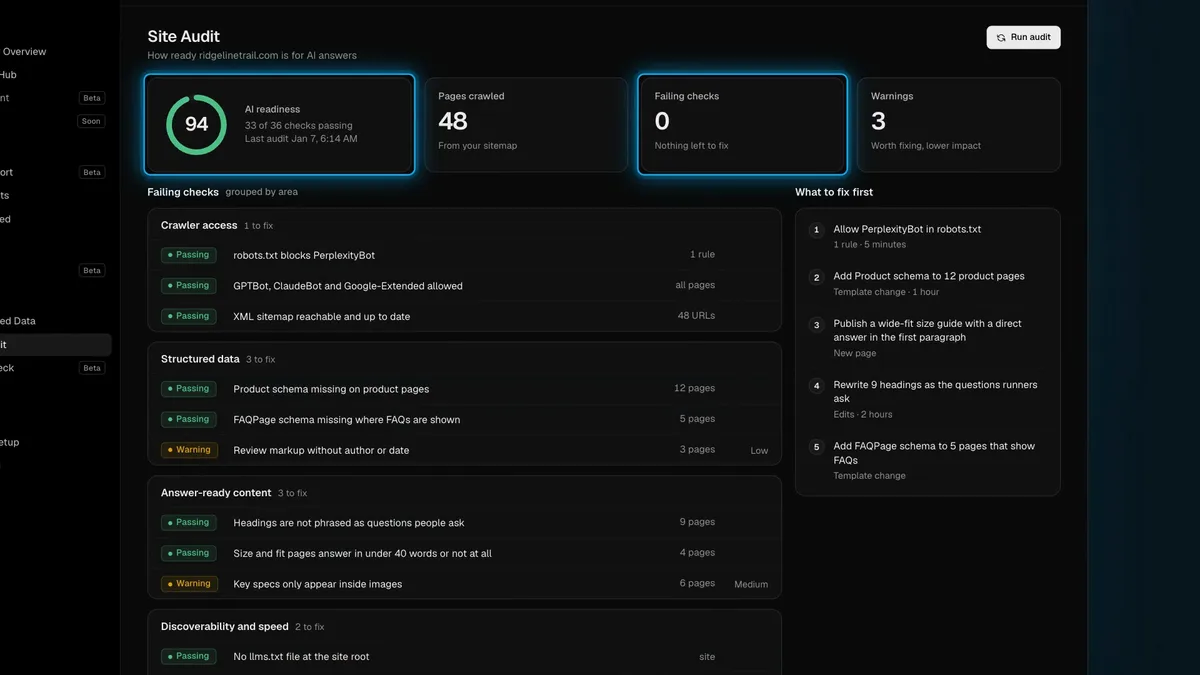 AI crawlers and robots.txtWhich crawlers OpenAI, Anthropic, Perplexity and Google run, what each is for, and how to allow or block them.5 min readUpdated November 16, 2026
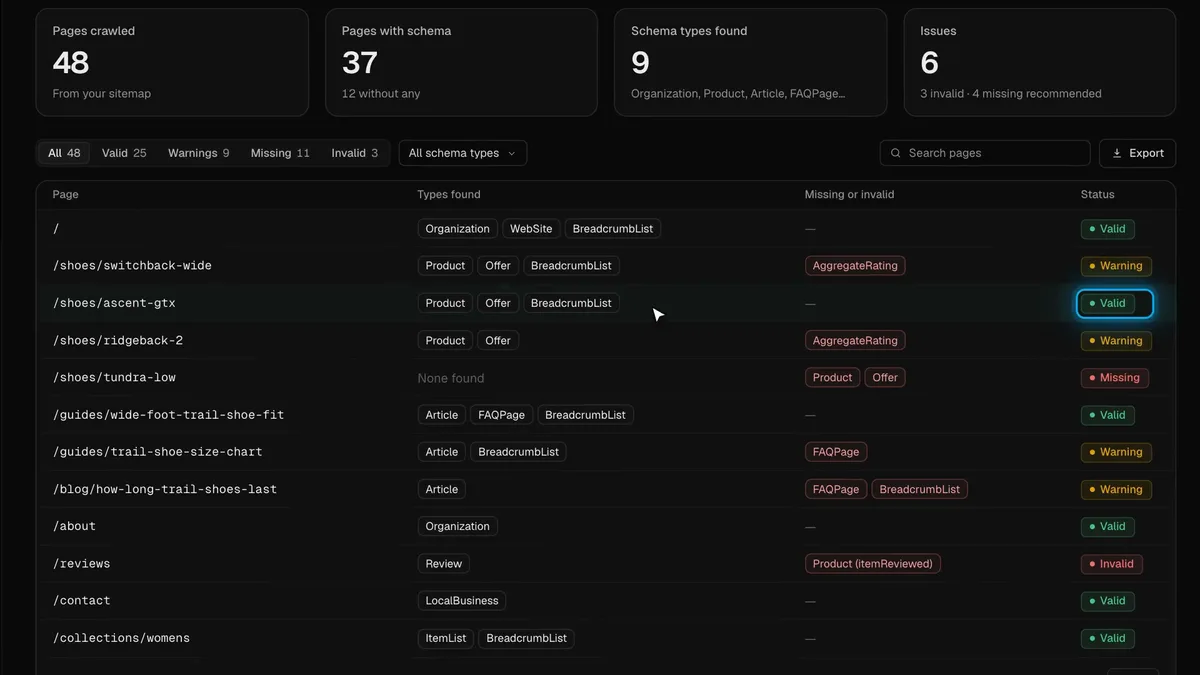 Structured data for AI searchWhat Google says about schema markup and AI features, which markup is still worth adding, and how to test it.4 min readUpdated November 16, 2026
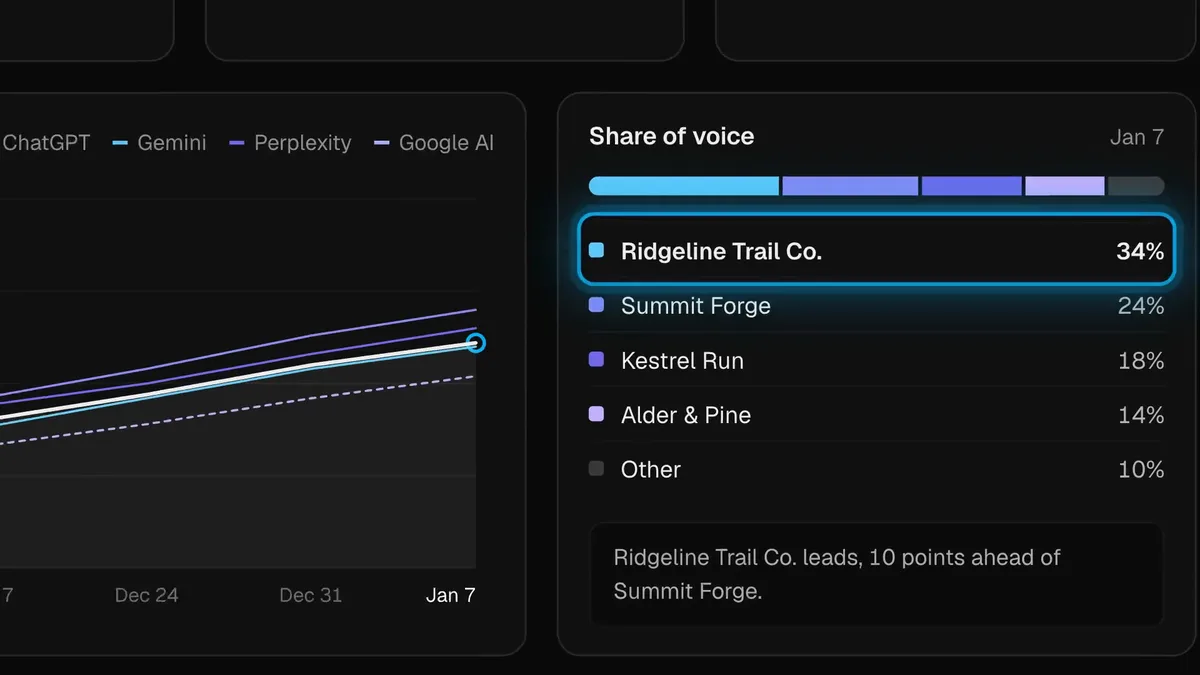 What is GEO?A plain definition of GEO and AEO, how they relate to SEO, and what the work involves.5 min readUpdated November 16, 2026
See how AI answers describe your business today.
Auden is a GEO service for US businesses. Run the free visibility check, or talk to the team about a plan.