GEO vs SEO
GEO doesn’t replace SEO. It raises the bar.
Your SEO still matters → it’s just not enough on its own anymore. Our hybrid approach plans both together, so every page we touch works for Google and for the AI answer that now sits above it.

Two jobs, two scoreboards
GEO stands for generative engine optimization. It means working on how your business appears in AI answers. AEO stands for answer engine optimization. It means making your information useful when someone asks a question. The names overlap. The practical work matters more. From the buyer guide.
SEO
Gets your link higher in search results.
- Wins withkeywords, backlinks, and page rankings.
- Measured inclicks and position.
The old search. Keywords in. Ten links out. Then you did the work.
GEO / AEO
Gets your brand named as AI’s answer + your site cited as the source.
- Wins withclear facts, structured content, and trusted mentions across the web.
- Measured inmentions, citations, and share of voice.
The new search. Questions in. One answer out, with sources.
GEO vs SEO: what changes in practice?
SEO helps search engines understand your pages and people find them. GEO adds a review of how AI answers describe your business and use supporting sources. The work overlaps: Google says existing SEO practices apply to AI Overviews and AI Mode, with no special AI markup required.
| What to compare | SEO review | AI-answer review |
|---|---|---|
| Question | Can people find the right page through search? | For a specific buyer question, is your business mentioned accurately and supported by useful sources? |
| Work | Check access, indexing, page content and internal links. | Use those foundations, check the relevant service’s access rules, and investigate missing or incorrect information in saved answers. |
| Evidence | Review search impressions, clicks and average position for relevant pages and queries. | Save the prompt, service, mode, date, answer and cited pages. Repeat the same question and retain unfavorable results. |
| Useful output | A prioritized list of site improvements and a search-performance record. | A record connecting observed answer gaps to proposed changes, completed work and repeat observations. |
If important pages cannot be accessed or understood, start with those foundations. If you need to examine inaccurate or incomplete AI answers, add a small, repeatable set of buyer-question checks. These are practical ways to prioritize the work, not promises of visibility.
Where they overlap
This work still needs good SEO: the basics that help search engines find and understand a website. Google says you do not need special AI markup for AI Overviews or AI Mode. Following its rules does not guarantee that your page will appear.
- Crawlable pages, useful information and sound search foundations remain important. AI answer research adds another observation layer; it does not remove the need for an accessible website.
- Google says a page must be indexed and eligible for a search snippet to appear as a supporting link in AI Overviews or AI Mode.
- Accurate structured data can still serve relevant search features; a blanket AI schema project needs a clearer purpose. Markup is a description of the page, not a promise of AI inclusion.
- Put the main answer near the top. Then explain the details that might change a buyer’s decision: who it is for, what is included and what is not, and the facts that back up claims.
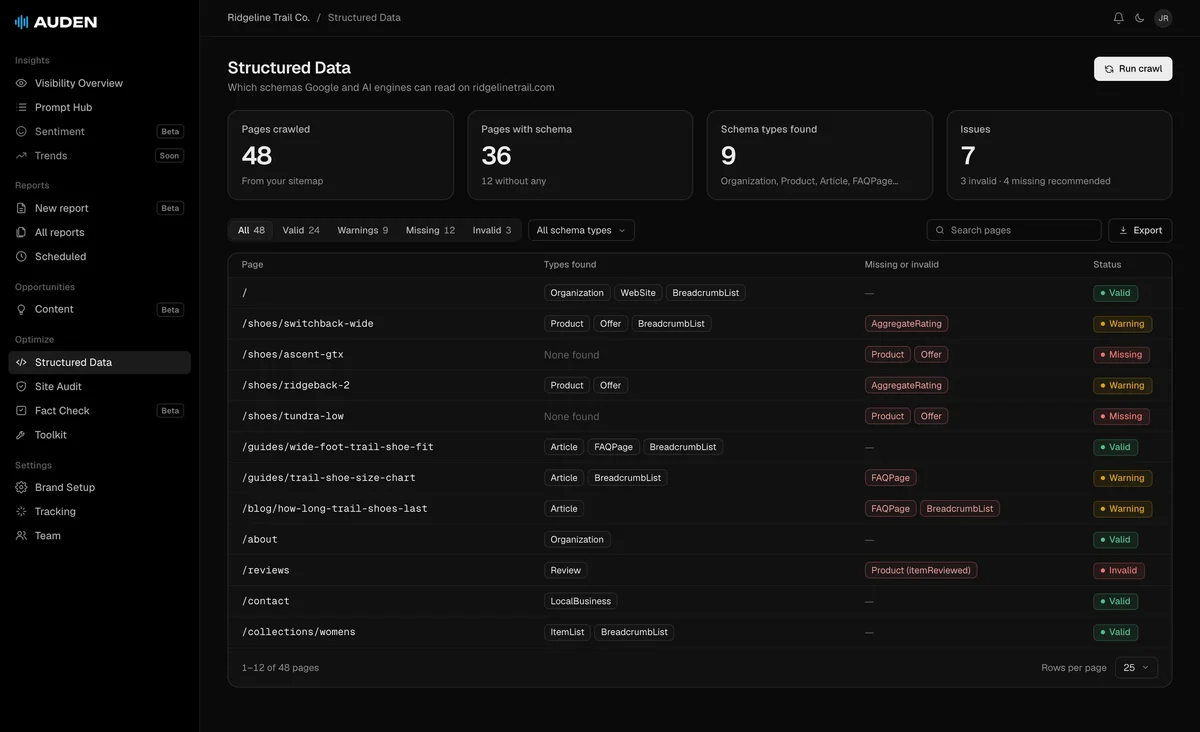
The schemas on each page
Which schemas Google and AI engines can read on each page of the site, with missing and invalid markup flagged.

Where they differ: what gets measured
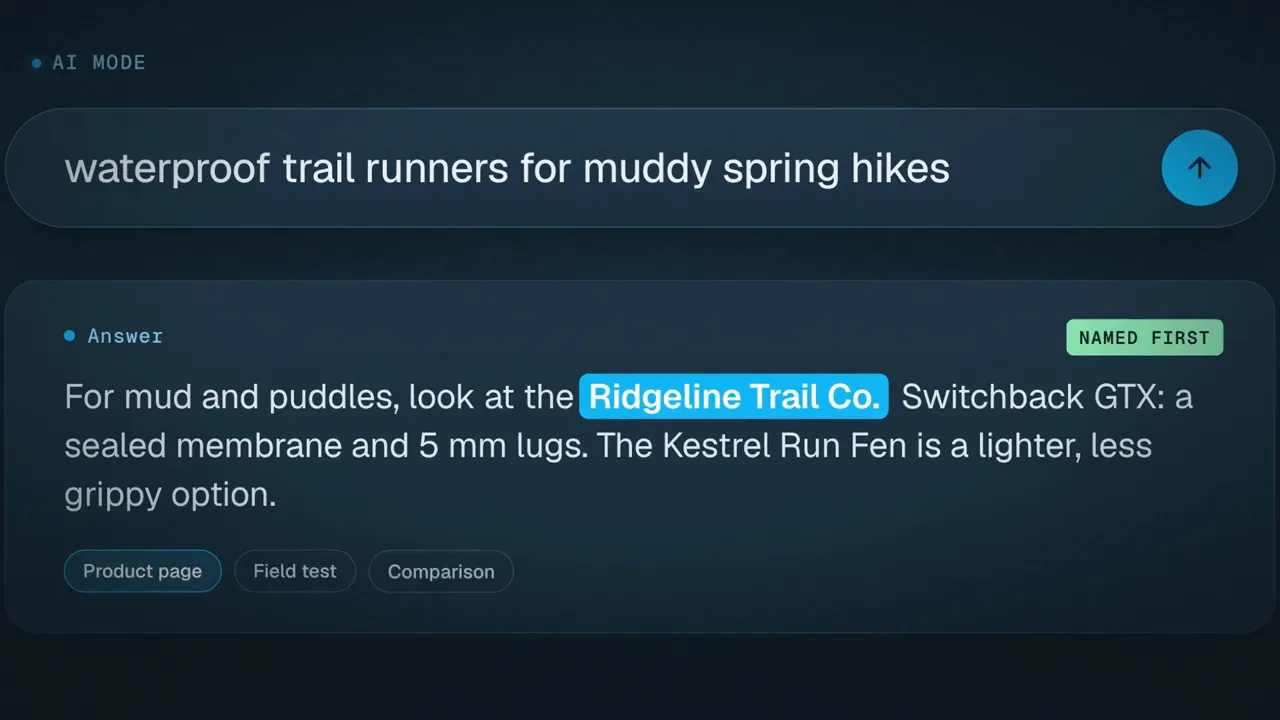
SEO is measured in clicks and position. GEO reporting mixes numbers that answer different questions, so each one is kept in its own column. Ask any provider, Auden included, to keep them apart.
Mentions, visits, inquiries and revenue remain separate measures. A mention is not a sale. One step does not prove the next. Source: the agency scorecard and the buyer guide.
What Auden does about each
Our hybrid approach plans both together, so every page we touch works for Google and for the AI answer that now sits above it. Auden finds the gap. Our team closes it.
- Technical
Technical GEO and schema.
If AI can't read it, it can't recommend it. We fix crawler access, structured data, schema markup, and llms.txt so AI engines see exactly what the winning sites give them.
- Content
Content creation and optimization.
New answer pages, FAQs, and comparisons written from your approved brand facts, plus rewrites of your existing pages so AI can understand them, quote them, and cite them.
- Rebuild
Page rebuilds and testing.
We rebuild the pages AI skips, stage every change before it goes live, and re-verify the answer after publishing, with a rollback ready if something doesn't land.
- Report
Reporting and ROI.
Weekly answer checks, a monthly scorecard, and a clear look at how GEO is impacting your traffic, sentiment, and sales, with every number traced back to the saved AI answer it came from.
We do not guarantee rankings, citations, traffic or revenue. No one can guarantee what an AI assistant will answer, so Auden reports what was actually said.
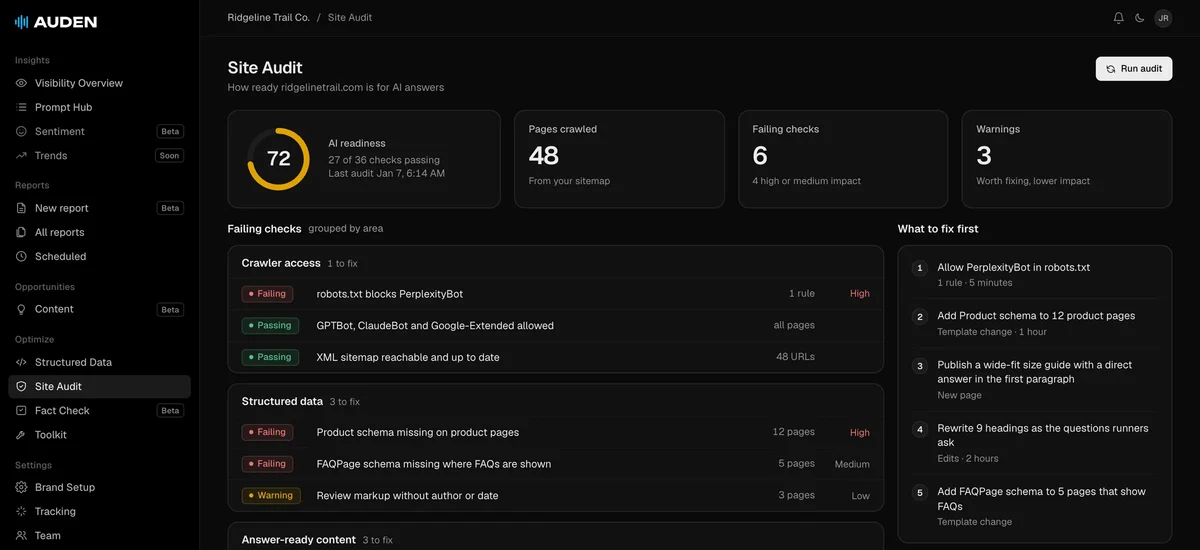
How ready the site is for AI answers
Failing checks grouped by area, the pages they affect and what to fix first.
Good questions
Does GEO replace SEO?
No. Crawlable pages, useful information and sound search foundations remain important. AI answer research adds another observation layer; it does not remove the need for an accessible website.
Do all AI services work the same way?
No. ChatGPT, Claude, Gemini and Google Search are different experiences. Record which one you tested. An answer in one does not tell you what people see in another.
Can you guarantee ChatGPT or Google will recommend us?
No. Engines select and generate their answers. Access, accurate content and repeated testing help evaluate opportunities but cannot guarantee inclusion, rankings or revenue.
What does a GEO agency do?
It can research AI answers, identify missing or unclear evidence, improve website content and technical access, and measure changes. Ask who implements the recommendations and how results are defined.