Measurement
Your Customer Discovered Your Product Through AI. Did You Measure It?
By Chief Strategy Officer, Auden AI4 min read
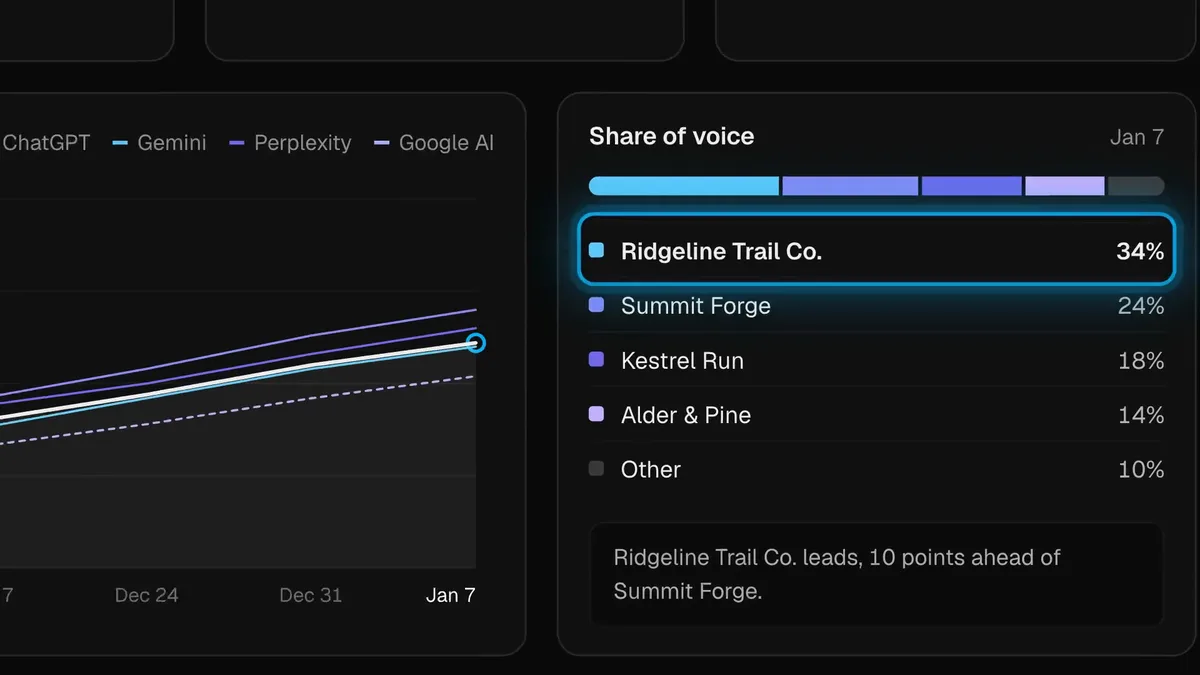
A customer can discover a product in an AI conversation, open a marketplace app later and complete the purchase without leaving an obvious trail that connects the two events. The sale appears in marketplace reporting. The AI interaction may be invisible. That creates a growing measurement challenge for ecommerce brands: how do you understand the value of discovery when the discovery and purchase happen in different places?
The journey is no longer a straight line
Traditional ecommerce measurement often assumes a sequence that can be observed: a shopper searches, clicks an ad or listing, visits a product page and purchases. AI-assisted discovery can add an earlier and less visible step. A shopper may ask an assistant for the best option for a particular need, compare several products, receive a recommendation and remember a brand. The shopper may then search for the brand on Amazon or Walmart, visit a retailer directly or return days later to buy.
In that scenario, the marketplace may record the search, click and sale, but not the conversation that shaped the shortlist. A referral report may capture some visits from AI platforms, but it will not necessarily capture a recommendation that influenced a later branded search or an in-app marketplace purchase. The absence of a referral does not prove that AI had no influence.
Separate visibility from attribution
One mistake is to treat AI visibility as if it were a direct sales metric. Being mentioned in an answer, cited as a source or included in a product comparison can be meaningful, but it does not automatically mean a purchase occurred. The reverse is also true: a sale may have been influenced by AI discovery even when the final transaction is attributed to a marketplace search or another channel.
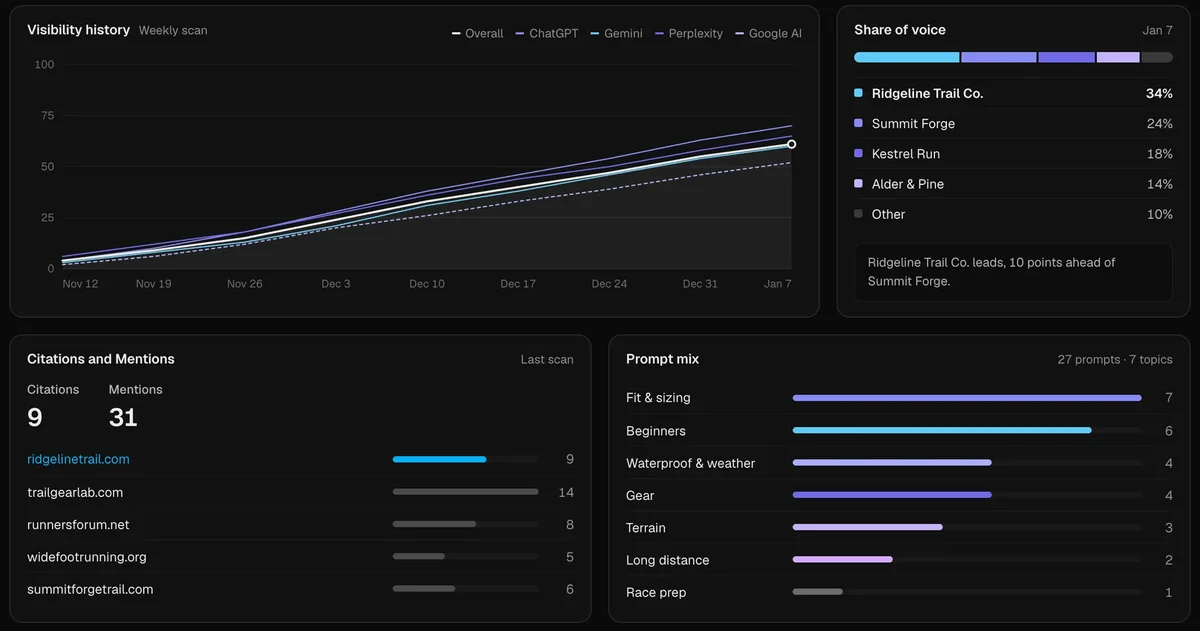
A practical measurement approach should keep three layers separate. The first is visibility: does the brand appear for relevant consumer prompts, and is the description accurate? The second is engagement: are people clicking through to the brand website or taking another measurable action? The third is business outcome: are traffic, conversion, new-to-brand customers, marketplace sales or other commercial indicators changing? These layers can be analyzed together, but they are not interchangeable.
Build a measurement framework
Start by defining a consistent set of prompts that represent real category demand. Include non-branded questions, use-case questions, comparison prompts and problem-based searches. Run them across the AI platforms that matter to the category and record whether the brand appears, which products are mentioned, what attributes are emphasized and which sources are cited. Repeat the process on a schedule so that changes can be observed rather than relying on a one-time screenshot.
Next, monitor the measurable traffic signals. Use analytics to identify referrals from AI platforms where those referrals are exposed. Track landing pages, engagement and conversion for that traffic. Add campaign tags to links the brand controls, such as links in owned content or campaigns, so those visits can be distinguished. Do not assume that every AI platform will pass a consistent referrer or that every interaction will produce a click.
Then compare the visibility and traffic trends with marketplace performance. Review branded and non-branded search trends, marketplace search query reporting where available, product detail page sessions, conversion rates, sales and advertising efficiency. Look for patterns across time and products. For example, a product may gain visibility in AI answers before a change in branded demand or marketplace sales becomes apparent. That sequence is a hypothesis worth investigating, not proof of causation.
Use experiments where possible
Measurement improves when teams can test a specific change. Improve product information, add a detailed comparison guide or publish a useful explanation of a product use case. Record the change date, monitor whether the content is cited or referenced in relevant AI responses and compare downstream signals with a baseline. Where practical, use holdout products, categories or markets to reduce the risk of confusing correlation with causation.
Also establish a shared view across SEO, marketplace, paid media and analytics teams. AI discovery does not respect channel boundaries. A brand may be introduced in one environment, researched in another and purchased in a third. Reporting that stops at the channel where the transaction occurred can miss part of the customer journey.
The goal is better decisions, not false precision
No single dashboard currently captures every AI conversation and connects it to every marketplace transaction. Brands should be transparent about that limitation. The objective is to combine the signals that are available, identify meaningful patterns and make better decisions about content, product data and investment.
The question is no longer only whether a customer clicked an ad. It is whether the brand is being discovered, understood and considered before the customer reaches the point of purchase. The brands that build a measurement discipline now will be better prepared as AI platforms provide more visibility and attribution tools.
Sources and further reading
Related articles
 ChatGPT
Businesses in ChatGPT: What Ecommerce Brands Need to Know
AI discovery is becoming a business channel, not just a place where consumers ask questions.
3 min read
 AI search
Google's AI Search Shift: What It Means for Ecommerce Advertising
Search is changing from a list of links into a more conversational experience that can help people research, compare and make decisions.
4 min read
All Resource Center articles →