Agentic commerce
Walmart's Agentic Commerce Strategy: What Brands Need to Prepare For
By Chief Strategy Officer, Auden AI4 min read

Walmart is preparing for a shopping experience in which customers may ask AI agents to help them find and buy products. Its announced Agent Profiles and Walmart Agent Gateway point to a future where shopping agents can interact with Walmart through a more controlled and reliable connection. For brands selling on Walmart, the development is another reason to treat product data and catalog quality as strategic assets.
What Walmart announced
Walmart’s October 2026 announcement describes three connected pieces. Agent Profiles are designed to give each authorized shopping agent a dedicated profile within a customer’s Walmart account. Customers can set purchase approval preferences and spending limits, and see agent purchases separately. The Walmart Agent Gateway is intended to provide agents with a more direct and reliable way to shop using a technical connection based on MCP, with a beta planned for companies and developers. Walmart also outlined terms governing what agents can and cannot do when shopping on behalf of customers.
The customer controls are central to the announcement. Walmart says customers must approve agent purchases by default, may be asked for additional approvals and can set limits or remove an agent profile. The company also says agents should only access information needed for the task and permitted by the customer. These safeguards are part of the infrastructure Walmart is building around agent-led commerce.
Why the gateway matters
Today, many agents interact with ecommerce websites through a browser, using pages and workflows designed for people. That can be slow and unreliable. A dedicated gateway can give approved agents a more structured way to discover products and complete permitted shopping tasks. It also gives the retailer more control over how those interactions happen.
For Walmart, this is about making its assortment and shopping experience available in the places customers choose to use while maintaining account permissions, purchase controls and its customer relationship. It is not simply an open invitation for any agent to crawl the site or place orders without restrictions. Brands should pay attention to the access model and terms rather than assuming every AI agent will have the same ability to retrieve or transact against Walmart’s catalog.
The implications for product content
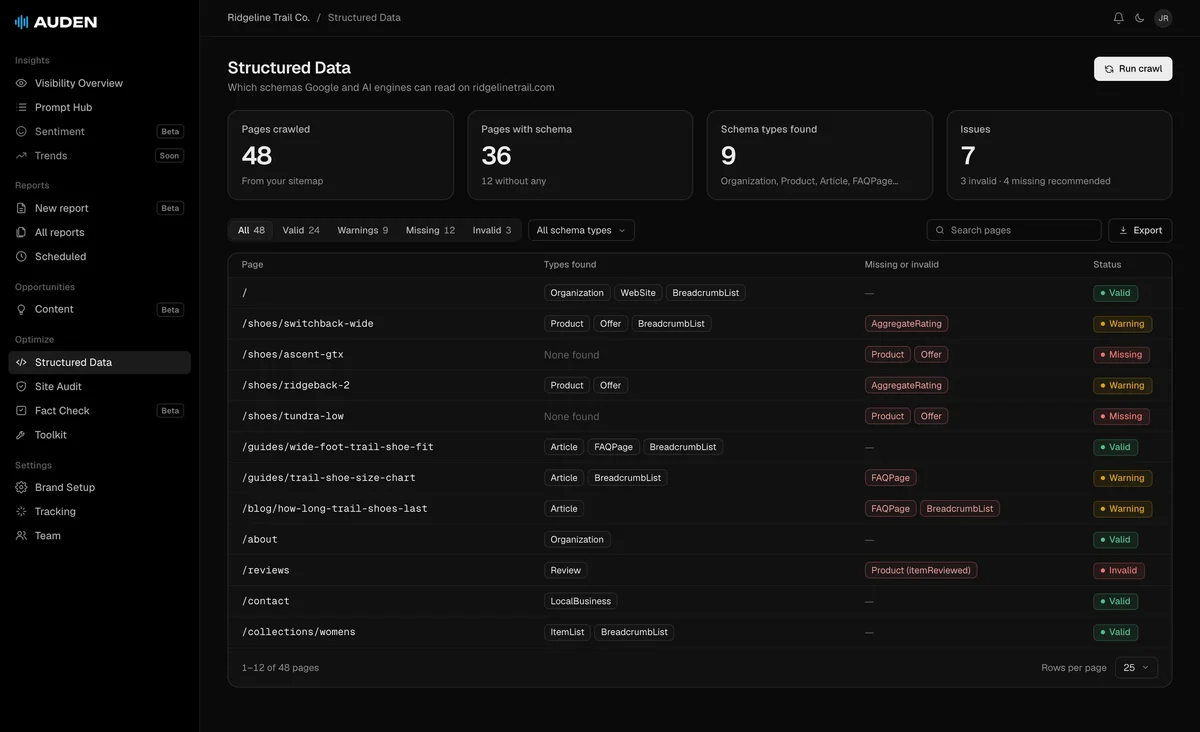
When a human shopper browses a product page, they can interpret images, read between the lines and move between tabs to find missing information. An agent needs product details that are explicit and machine-readable. Missing attributes can make it harder to determine whether a product meets the shopper’s requirements.
Brands should review titles, descriptions, category assignments, attributes, variants, pack counts, dimensions, ingredients or materials, compatibility, safety information and use cases. Ensure images accurately represent the product and that the information is consistent across the brand’s catalog and Walmart listing. Pricing, inventory and fulfillment details also need to be current because they can affect whether an item is a viable recommendation.
Differentiation is equally important. If two products appear similar, an agent needs reliable facts to explain why one may be a better fit. Brands should clearly state the features that matter to a purchase decision and support performance claims with credible information. Avoid relying on vague superlatives that do not help a customer compare alternatives.
What marketplace teams should do now
Start with a catalog audit. Identify missing or inconsistent attributes across priority products and categories. Review content against the questions shoppers ask before buying, including compatibility, sizing, intended use, ingredients, care and product limitations. Confirm that variant relationships and pack configurations are clear.
Next, build a governance process. Decide who owns product information, how changes are approved and how quickly inaccurate details are corrected. Coordinate marketplace operations, brand, ecommerce, regulatory and supply chain teams so that the information presented to customers stays aligned with current product and inventory realities.
Finally, monitor Walmart’s developer and partner updates as the Agent Gateway beta develops. Confirm eligibility, technical requirements, access rules and supported workflows before investing in an integration. The announcement describes a direction and a beta pathway; it does not mean every brand can immediately connect its own agent or control how Walmart’s systems recommend products.
Agentic commerce starts with the fundamentals
The arrival of shopping agents does not eliminate the need for strong marketplace execution. It makes the fundamentals more important. Accurate catalog data, clear product differentiation, dependable availability and a consistent customer experience are essential whether a shopper is browsing Walmart.com or asking an agent to shop on their behalf.
Walmart’s strategy is a signal that agentic commerce is moving from experimentation toward platform infrastructure. Brands that improve their product information and operational discipline now will be in a stronger position as these experiences expand.
Sources and further reading
- Walmart: Making It Possible for Agents to Shop on Behalf of Customerscorporate.walmart.com
Related articles
 Retail media
How AI Shopping Agents Could Change Amazon and Walmart Advertising
Retail media has grown around a familiar exchange: shoppers visit a retailer’s website or app, search for products, browse results and encounter sponsored placements along the way.
4 min read
 AI shopping
From Search Bars to Conversations: The Future of AI-Powered Shopping
Shopping has traditionally started with a search box. A consumer enters a keyword, scans a list of products and opens listings to compare options.
4 min read
All Resource Center articles →