GEO guides · Fundamentals
How do AI assistants choose which sources to use?
An AI assistant answers either from what its model already learned or by searching the web as you ask. When it searches, it turns the question into one or more searches, reads what comes back, writes an answer and usually links its sources. The vendor documentation we read describes these steps and gives no ranking formula.
Last updated November 16, 2026 · By Auden editorial team · 5 min read

Key takeaways
- Assistants decide per question whether to search. Questions about specific companies and products, which change, are the ones most likely to trigger a search.1
- One question can become many searches. Google calls this query fan-out.2
- Eligibility comes first. Each engine has a crawler or index that decides whether your page can be a source at all.
- Google says no third-party tool has access to its internal ranking or AI systems.3
How does an assistant decide whether to search the web?
Most assistants decide for each question. Claude searches when a request depends on information that is current, changing or outside its training data, and answers directly for stable knowledge such as math. Google says AI Overviews appear only when its systems judge them useful, and Copilot fetches from Bing when web information helps.
Anthropic’s API documentation lists what pushes Claude to search: recent events, current prices and statistics, information about specific organizations, people or products that might have changed, and explicit requests to look something up.1 The Claude help center says that with the new Claude experience there is no web search toggle, and Claude searches when it helps.4
For a business, the practical reading is that buyer questions naming a company, a product or a price are the kind that send an assistant to the web. Those are the questions where your pages can be read and cited.
Google says AI Overviews are shown only when its systems determine they add value to classic Search, so they often do not appear.2 Microsoft says Copilot may fetch information from Bing when information from the web helps it give a better, more grounded response.5
How does one question become several searches?
Google says AI Overviews and AI Mode may use query fan-out, which issues multiple related searches across subtopics and data sources. Microsoft says Copilot parses the prompt and sends Bing a short generated query of a few words. Claude documents that comparison or multi-entity research can use ten or more searches.251
The consequence is that a page can be retrieved by a sub-question the buyer never typed. A page that answers one narrow question well can be found through a different phrase than the buyer’s own.
Google says fan-out can surface a wider and more diverse set of helpful links than classic Search.2 Microsoft shows people the exact search queries Copilot sent to Bing in the citations section of Copilot Chat, and keeps them in the chat thread for 24 hours.5

What makes a page eligible to be a source?
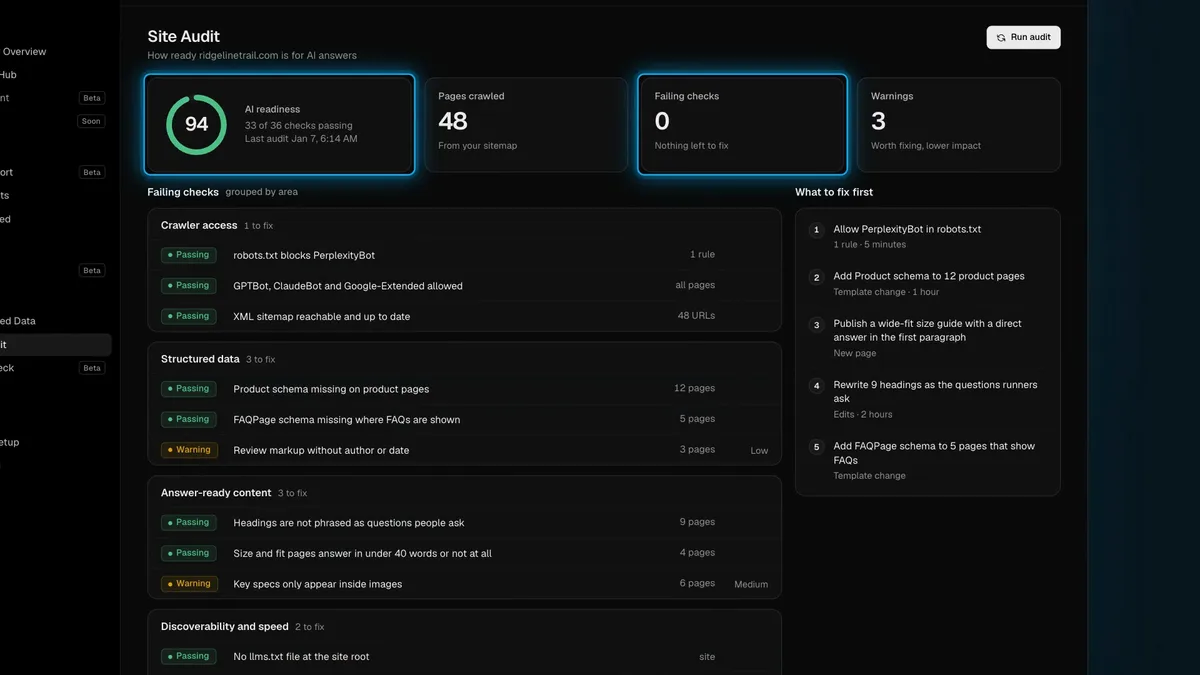
Eligibility is set by each engine’s own crawler or index. Google requires a page to be indexed and snippet-eligible. OpenAI, Anthropic and Perplexity each run a named search crawler, and the vendors say that opting out of it removes you from their search answers or reduces your visibility there.2678
| Assistant | What decides eligibility | What the vendor says |
|---|---|---|
| Google AI Overviews and AI Mode | Googlebot and the Search index | Indexed and eligible to be shown with a snippet; no additional technical requirements.2 |
| ChatGPT search | OAI-SearchBot | Opting out hides sites from ChatGPT search answers, though they can still appear as navigational links.6 |
| Claude | Claude-SearchBot | Disabling it stops indexing for search and may reduce visibility and accuracy in search results.7 |
| Perplexity | PerplexityBot | Sites that want to appear in results should allow it.8 |
| Microsoft Copilot | The Bing search service | Bing respects content owner preferences set through robots.txt.10 |
The AI crawlers and robots.txt guide shows how to set each one.
How do assistants show their sources?
Each product has its own pattern. Perplexity attaches numbered citations to each answer. Claude includes citations in responses that use search, with source links and sometimes quotes. Google shows supporting links in AI Overviews and AI Mode. Bing counts citations in Copilot and in AI-generated summaries.94210
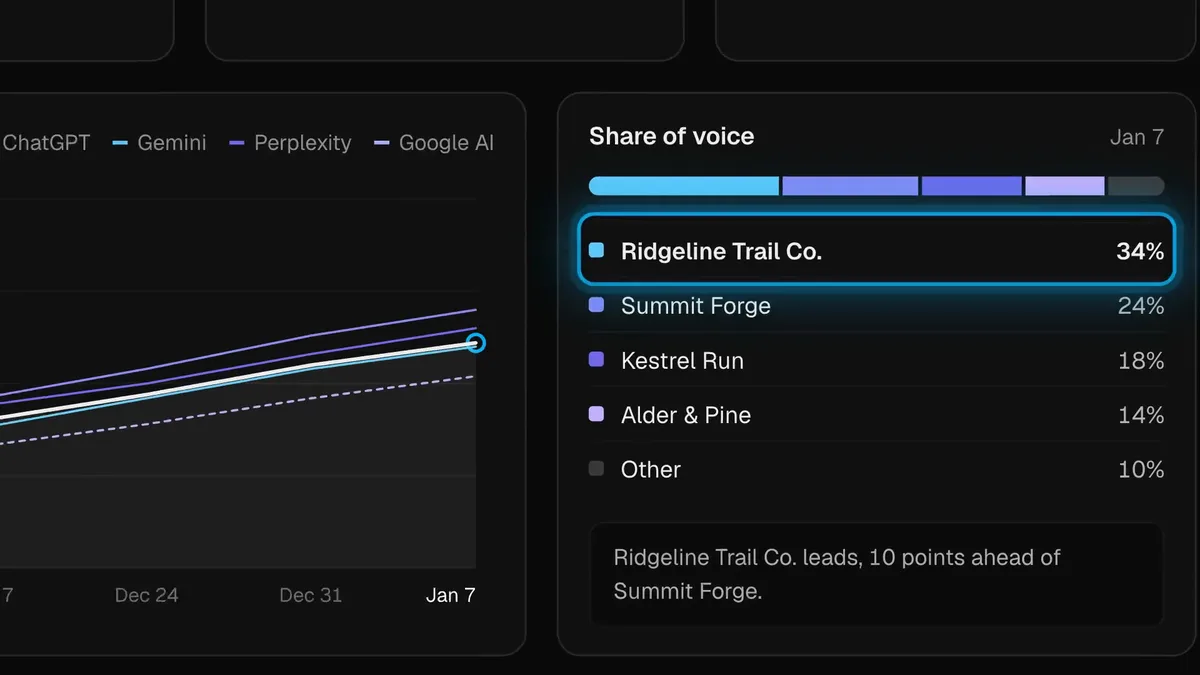
A source link is not the same as a recommendation. Bing states that its citation counts do not show placement within an answer or a page’s role in it.10 The guide on citations vs recommendations explains how to measure the difference.
What do the vendors not tell us?
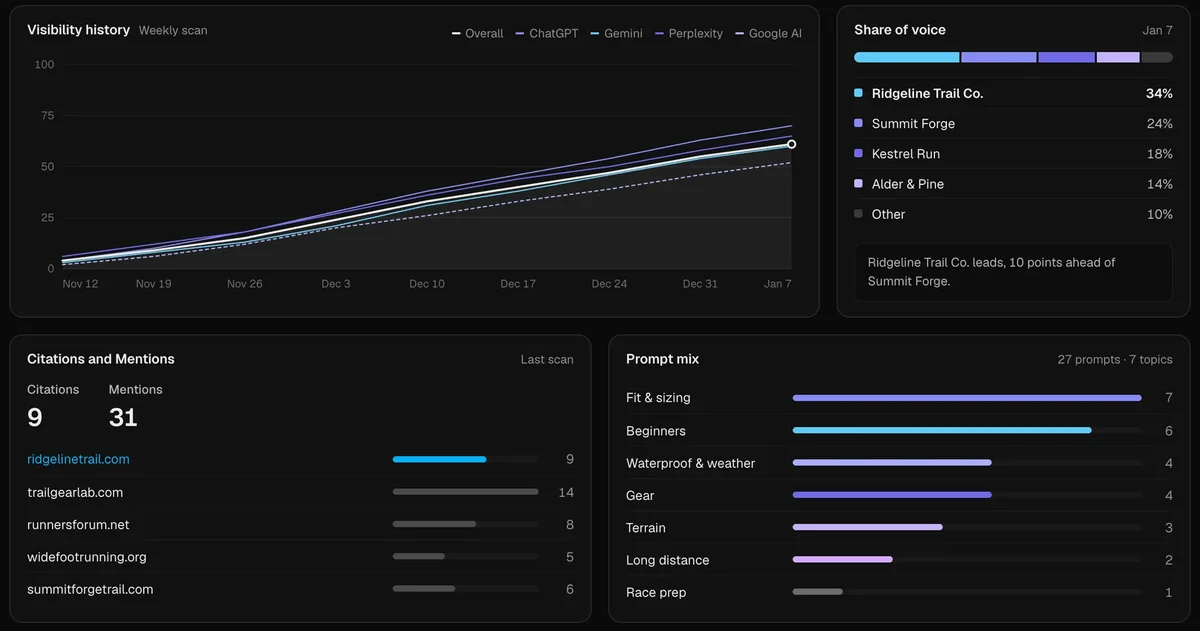
None of the vendor pages we read publishes a ranking formula, and Google says no third-party tool has access to its internal ranking or AI systems. Treat claims about secret ranking factors with caution. Test what assistants actually say about your business instead, and repeat the test over time.3
That is the reason for the measurement guides in this hub. Prompt tracking records what answers say, and measuring AI search traffic covers the numbers Google and Bing report.
Questions people ask
Do all AI assistants use the same sources?
Does an assistant always search the web?
No. Claude answers directly for stable knowledge and searches when a request depends on current or changing information.1
Is training data the same thing as search?
If I rank well on Google, will AI Overviews cite me?
Google lists being indexed and snippet-eligible as the requirement, and says indexing and serving are not assured.2 It does not describe a ranking threshold.
Can I see which searches an assistant ran?
In Microsoft Copilot Chat, yes. The citations section shows the web search queries sent to Bing, available in the chat thread for 24 hours.5
Sources
Every statement about how an engine, crawler, file or schema works comes from the pages below, which we read on November 16, 2026. Vendors change these pages, so check the originals before you act.
- 1Claude Platform DocsWeb search toolplatform.claude.com/docs/en/agents-and-tools/tool-use/web-search-tool · accessed November 16, 2026
- 2Google Search CentralAI features and your websitedevelopers.google.com/search/docs/appearance/ai-features · accessed November 16, 2026
- 3Google Search CentralOptimizing your website for generative AI features on Google Searchdevelopers.google.com/search/docs/fundamentals/ai-optimization-guide · accessed November 16, 2026
- 4Claude Help CenterEnable and use web searchsupport.claude.com/en/articles/10684626-enable-and-use-web-search · accessed November 16, 2026
- 5Microsoft LearnData, privacy, and security for web search in Microsoft Copilot and Microsoft Copilot Chatlearn.microsoft.com/en-us/copilot/microsoft-365/manage-public-web-access · accessed November 16, 2026
- 6OpenAI DevelopersOverview of OpenAI crawlers (OAI-SearchBot, GPTBot, ChatGPT-User)developers.openai.com/api/docs/bots · accessed November 16, 2026
- 7Anthropic Privacy CenterDoes Anthropic crawl data from the web, and how can site owners block the crawler?privacy.claude.com/en/articles/8896518-does-anthropic-crawl-data-from-the-web-and-how-can-site-owners-block-the-crawler · accessed November 16, 2026
- 8Perplexity DocsPerplexity crawlers (PerplexityBot and Perplexity-User)docs.perplexity.ai/guides/bots · accessed November 16, 2026
- 9Perplexity Help CenterHow does Perplexity work?www.perplexity.ai/help-center/en/articles/10352895-how-does-perplexity-work · accessed November 16, 2026
- 10Bing Webmaster BlogIntroducing AI Performance in Bing Webmaster Tools Public Preview (February 10, 2026)blogs.bing.com/webmaster/February-2026/Introducing-AI-Performance-in-Bing-Webmaster-Tools-Public-Preview · accessed November 16, 2026
Related guides
 What is GEO?A plain definition of GEO and AEO, how they relate to SEO, and what the work involves.5 min readUpdated November 16, 2026
 Citations vs recommendationsWhy a page can be cited while a competitor is named, and how to measure each outcome separately.5 min readUpdated November 16, 2026
 AI crawlers and robots.txtWhich crawlers OpenAI, Anthropic, Perplexity and Google run, what each is for, and how to allow or block them.5 min readUpdated November 16, 2026
See how AI answers describe your business today.
Auden is a GEO service for US businesses. Run the free visibility check, or talk to the team about a plan.